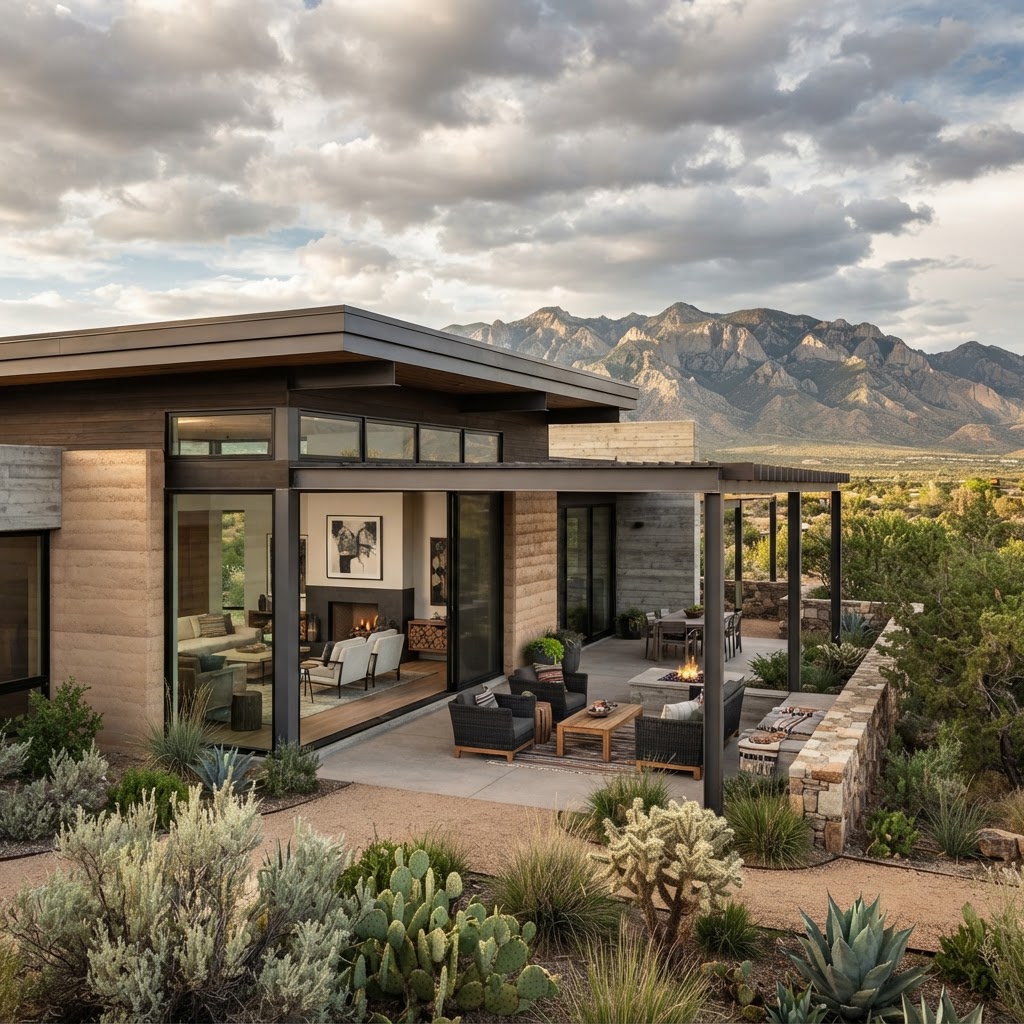
Southwest and high-desert architecture has become the signature style of homes across New Mexico and Texas, and for good reason. It's not just a look; it's a way of designing that respects the climate, frames the landscape, and reduces energy use. Here's what defines the style and how it performs in the Southwest.
What Defines Southwest Architecture
- Indoor-outdoor living — large sliding glass walls open living spaces to patios, portals, and desert views.
- Natural, earthy materials — rammed earth, board-formed concrete, steel, stone, and viga beams that weather beautifully in the sun.
- Deep overhangs and shade — architectural shade that blocks summer sun while admitting low winter light.
- Restrained, muted palettes — colors drawn from the desert so the home sits in the landscape rather than fighting it.
- Water-wise design — native landscaping, efficient fixtures, and drainage tuned for monsoon runoff.
Why It's Built for the Southwest
Southwest design isn't just aesthetic, it's performative. Proper orientation and shading dramatically reduce cooling loads. High-performance glazing and insulation keep heat out. And materials chosen for the sun hold up where others fade and crack. The result is a home that's comfortable year-round and cheaper to run.
Is Southwest Style Right for You?
The style suits the Southwest's high-desert cities — Albuquerque, Santa Fe, El Paso, Las Cruces — especially well, but it can be adapted to nearly any lot. If you're drawn to clean lines, natural materials, and a strong connection to the outdoors, Southwest architecture is a natural fit.
Explore our portfolio of Southwest homes, or start with a free estimate for your project.